Research
MagicAid strives to maintain an evidence-based curriculum that maximizes impact for pediatric patients and our medical student volunteers. We have an active and growing research program spanning pediatric inpatient, emergency, and perioperative settings. Our work has been published in peer-reviewed journals including The Lancet and presented at national conferences including the Pediatric Academic Societies Annual Meeting.
Contact our Research Director, Harrison Pravder, MD, Harvard Medical School / Massachusetts Eye and Ear
.jpg)
Latest Presentations
MagicAid Student Posters from 2025 Pediatric Academic Societies Annual Meeting, Honolulu, HI
Title: Magic as an Anxiety-Reducing Tool for Children Undergoing Invasive Procedures in the Emergency Department

Title: Assessing the Feasibility of Magic Therapy as Distraction During Invasive Procedures in a Pediatric Emergency Department

Conclusions: Both magic therapy and CCLS therapies significantly reduced child and caregiver anxiety post-procedure. Magic therapy is non-inferior to standard CCLS-delivered therapies. Thus, magic can be integrated into the array of interventions to reduce distress in the Pediatric Emergency Department and help promote a positive, interactive experience for patients.
Conclusions: Magic therapy was highly effective and well-received in reducing procedural anxiety in the Pediatric Emergency Department. Children of all ages responded positively to magic therapy with notable reductions in anxiety, distress, and procedural fear. Engagement was strongest when both children and caregivers were actively involved and invested in the experience. Magic therapy served as a simple, non-invasive, and highly adaptable tool to improve the PED experience.

Completed Research
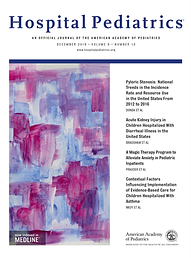
Title: Magic therapy to relieve pediatric patient anxiety and improve the hospitalization experience.
Principal Investigator: Dr. Maribeth Chitkara, MD, Department of Pediatrics, Stony Brook Children’s Hospital
Enrollment: 100 pediatric patients, aged 5-16 years old; 90 caregivers; 37 healthcare professionals.
It is not uncommon for hospitalized children to feel increased anxiety and psychological discomfort during a hospitalization. In this randomized single-blind study, we are examining if magic therapeutic interventions performed by MagicAid-trained medical students are effective in relieving patient and parent anxiety. We are also investigating which magic tricks are most effective. A successful anxiety reduction could provide indications for the use of magic therapeutic intervention in a wide range of medical settings and prior to procedures.
Publications:
1. Article: A Magic Therapy Program To Alleviate Anxiety in Pediatric Inpatients (2019). Hospital Pediatrics
2. Poster/Abstract: A randomized, prospective study to evaluate the efficacy of a novel program in magic therapeutic intervention for pre-clinical medical students (2018). Presented at Council on Medical Student Education Annual Meeting, Denver, CO
3. Poster/Abstract: A randomized, prospective study to evaluate the efficacy of a novel program in magic therapy for pre-clinical medical students (2018). Pediatric Academic Societies Annual Meeting, Toronto, Canada
ClinicalTrials.gov Identifier: NCT03308240

Title: Development, evaluation, and impact of the MagicAid medical student interest group
Principal Investigator: Dr. Maribeth Chitkara, MD, Department of Pediatrics, Stony Brook Children’s Hospital
Enrollment: 150 medical students
The first organized MagicAid student group was formed at Stony Brook School of Medicine in 2015. Since that time, the group has grown to include hundreds of medical students trained in magic therapy who have interacted with thousands of patients. The group is self-perpetuating with senior MagicAid medical students teaching younger students its techniques. The program has many goals for students, including: improvement of communication skills, development of empathic character, and early clinical contact. Most of these students engage their first patients as medical students within the context of a magic therapy session. Students are introduced to the healthcare team, including certified child life specialists, who play a central role in pediatric care. This project serves to evaluate the program as it stands today at our original site and to describe its successes and challenges.
Publication: Article, An Innovative Program Using Magic to Provide Early Clinical Experiences for Preclinical Medical Students: Goals, Experiences, and Results of the MagicAid Program (2022). Medical Science Educator
Active Research

The Effect of Magic Therapy on Pain and Anxiety in Pediatric Patients During Invasive Procedures (Needle-Related Procedures and Nasopharyngeal Swabs) in the Emergency Department
Principal Investigator: Dr. Carl Kaplan, MD, Department of Pediatrics, Stony Brook Children’s Hospital
Anticipated Enrollment: 78 pediatric patients and caregivers
The purpose of this study is to examine the use of magic therapy as a distraction technique during semi-invasive procedures (such as venipuncture, IV placement, and nasopharyngeal swabs) in the emergency department setting. Specifically, we are assessing the effectiveness of magic therapy in reducing procedure-related anxiety and pain.

Planned Research
Magic Therapy to Relieve Perioperative Anxiety in Pediatric Ambulatory Surgery
Principal Investigator: Dr. Ronald Jasiewicz, Department of Anesthesiology, Stony Brook Children's Hospital
Anticipated Enrollment: 75 pediatric patients, aged 4-12 years old
Just like patients in an inpatient pediatric hospital ward feel increased discomfort and anxiety, children undergoing surgery do as well - often to a greater extent. In this study, we will examine the impacts of magic therapy in relieving perioperative anxiety. We are investigating if magic tricks performed by MagicAid-trained individuals are similarly effective as preoperative sedation. If effective, this approach could reduce reliance on pharmacologic anxiolysis, improve patient and caregiver experience, and support more efficient pediatric perioperative care.


Service Learning, Empathy, and Burnout in Medical Students
A multisite prospective longitudinal cohort study across Stony Brook, NYMC, and UCLA
Overall PI: Harrison Pravder, MD, Harvard Medical School/Massachusetts Eye and Ear
Site PIs: Stephen G. Post, PhD (Stony Brook University); Melissa M. Cellini, MD, MEd (New York Medical College); Elizabeth L. Nguyen, MD (David Geffen School of Medicine at UCLA)
Anticipated Enrollment: Up to 500 medical students
MagicAid is leading a multicenter, longitudinal study to understand how service-learning experiences may shape empathy and burnout during the preclinical years of medical school. The study will follow first-year medical students at multiple institutions over time, comparing students involved in MagicAid and other service-learning programs with their classmates who are not involved in these activities.
Using validated measures of empathy and burnout, the study will explore whether early, meaningful patient-facing service experiences are associated with preservation of empathy, changes in burnout, and broader student well-being during medical training. By studying students across several medical schools, this project aims to better understand how programs like MagicAid may support humanism, connection, and resilience in future physicians.
Future Endeavors
1. Child Life Specialist-delivered magic therapy as a distraction therapy and its impacts on anxiety and pain.
2. Effectiveness of MagicAid training and performance in molding compassionate medical students and physicians.
3. Success of magic therapy as an additional child life therapeutic intervention.
4. Methods of using magic therapeutic intervention in physical therapy and occupational therapy for improving motor function.
5. Using magic therapeutic intervention as a method of social skills therapy in children diagnosed with autism spectrum disorder.
6. Magic therapy and service learning early clinical experiences as modalities to help stabilize and improve empathic character among medical students.
Conference Presentations & Abstracts
Oral Presentations
Pravder, H. & Randazzo, R. "Using Magic to Alleviate Pediatric Patient Suffering." Oral presentation at the Pediatric Palliative Care Conference, Stony Brook University, Stony Brook, NY. 2017.
Attard, M., Pravder, H., Elkin, D. "The Power of Magic and Medicine: A Collaborative Effort." Oral presentation at the Child Life of Greater New York (CLGNY) Conference, New York, NY. 2018.
Pravder, H. "Magic Therapy Alleviates Pediatric Patient Anxiety." Oral presentation at the Bridging the Impossible Symposium, London, UK. August 29, 2021.
Conference Presentations & Abstracts
Pravder, H., Leng-Smith, A., Brash, A., Elkin, D., et al., Chitkara, M. "A randomized, prospective study to evaluate the efficacy of a novel program in magic therapeutic intervention for pre-clinical medical students." Poster presentation at the Council on Medical Student Education (COMSEP) Annual Meeting, Denver, CO. 2018.
Pravder, H., Leng-Smith, A., Brash, A., Elkin, D., et al., Chitkara, M. "A randomized, prospective study evaluating the efficacy of a novel program in magic therapy for medical students." Poster presentation at the Pediatric Academic Societies (PAS) Annual Meeting, Toronto, Ontario, Canada. 2018.
Khattri, M., Tayyab, M., Bennett, A., Lopez, A., Sochan, AJ., Wong, BJ., Chesebro, AG., Pravder, HD., Kaplan, CP. "Magic as an Anxiety-Reducing Tool for Children Undergoing Invasive Procedures in the Emergency Department." Poster presentation at the Pediatric Academic Societies (PAS) Annual Meeting, Honolulu, HI. 2025.
Ha, J., Sochan, A., Chesebro, A., Lopez, A., Wong, B., Bennett, A., Pravder, H., Kaplan, C. "Assessing the Feasibility of Magic Therapy as Distraction During Invasive Procedures in a Pediatric Emergency Department." Poster presentation at the Pediatric Academic Societies (PAS) Annual Meeting, Honolulu, HI. 2025.
Gulzar, S., Ha, J., Sochan, A., Chesebro, A., Lopez, A., Wong, BJ., Bennett, A., Pravder, HD., Kaplan, C. "Assessing Caregiver and Staff Perceptions of Magic Distraction Therapy in the Pediatric Emergency Department." Poster presentation at the Pediatric Academic Societies (PAS) Annual Meeting, Boston, MA. 2026.
Lin, JD., Khattri, M., Sochan, AJ., Ha, J., Tayyab, M., Gulzar, S., Lopez, A., Wong, BJ., Bennett, A., Chesebro, AG., Pravder, HD., Kaplan, CP. "Determining the Efficacy of Magic Distraction Therapy to Alleviate Pediatric Patient and Caregiver Anxiety in the Emergency Department." Poster presentation at the Pediatric Academic Societies (PAS) Annual Meeting, Boston, MA. 2026.